16th century
The Bilevičiai estate
The estate originated with the Bilevičiai family. A wooden residence preceded the surviving masonry house.
THE MANOR THROUGH TIME
The manor’s owners, the building of the house and its changing uses, from the 16th century to today.
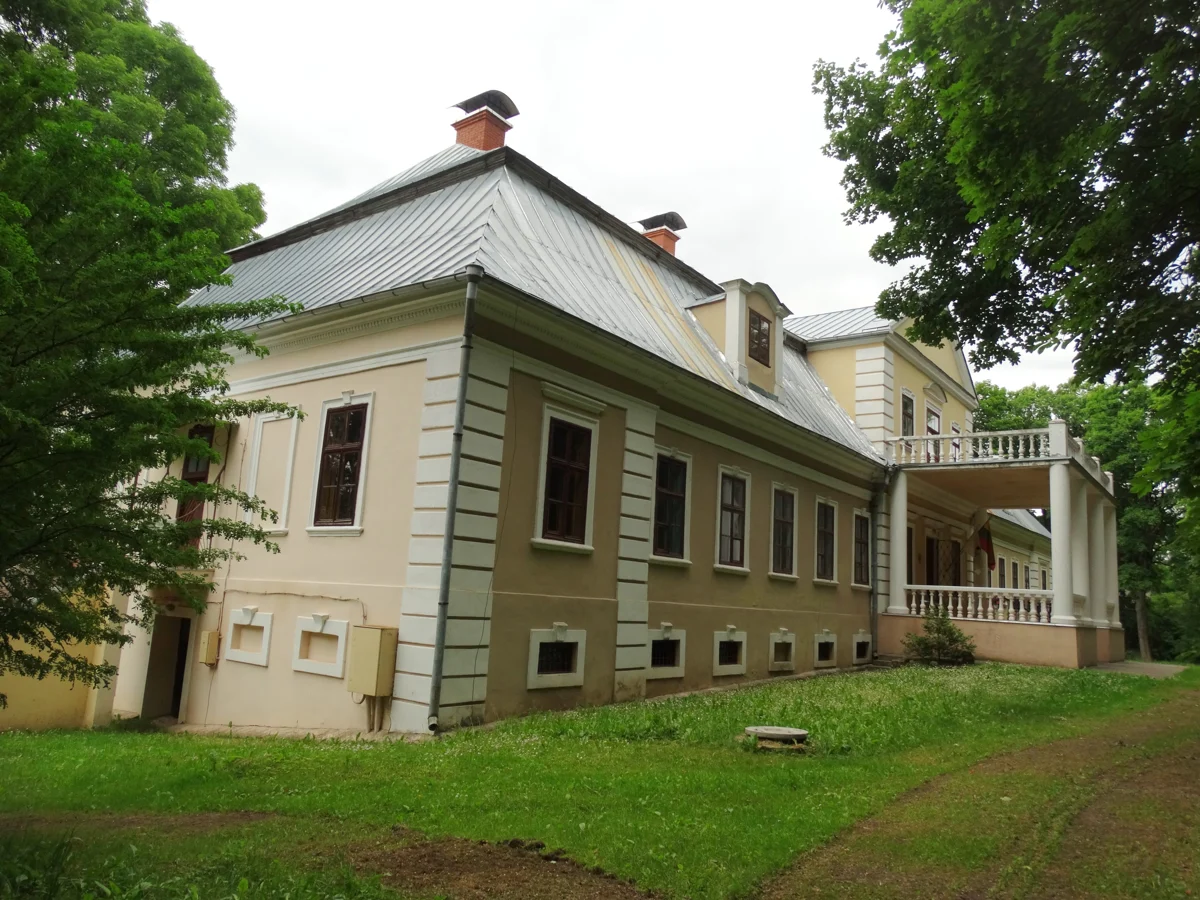
The first mention of the estate does not date the surviving house. Sources place its construction in the late 17th or the 18th century. Uncertain dates are explained beside each event.
16th-18th centuries
The estate originated with the Bilevičiai family. A wooden residence preceded the surviving masonry house.
A date recorded on the façade has been linked to earlier wooden buildings. It does not establish when the surviving house was built.
The Lithuanian Castles and Manors Association dates an early written reference to the Bilevičiai estate to this year.
A Žemaičių žemė overview refers to a detailed surviving description of the estate. The original document has not yet been obtained.
Arnas Zmitra attributes construction over earlier cellars to Steponas Aleksandras Bilevičius. Other accounts suggest 1699.
The Universal Lithuanian Encyclopaedia links Biliūnai with the headquarters of King Charles XII of Sweden. The nearby Volai earthworks are also associated with this period.
Historical accounts describe a geometric central layout, an orchard, a pond and a lime avenue. The planting evolved over time.
A published account of the inventory lists grain stores, an icehouse, a brewery, stables, a carriage house, livestock buildings and a mill.
The association’s account records a transfer to Antanas Gelgaudas, followed by a return to the Bilevičiai family.
Rasa Butvilaitė’s study records that Antanas Gelgaudas retained Biliūnai when dividing his estates. After his death, his sons sold it to meet debts; the note gives neither the precise sale date nor the buyer.
19th century - 1925
Arnas Zmitra’s account of the manor mentions a stay by Jacques Macdonald, a marshal in Napoleon’s army. A visit by Napoleon himself has not been established.
The association records Juozas Bilevičius leaving the estate to his granddaughters Kaliksta and Julija Piłsudski.
Following the uprising, Julijus Piłsudski was exiled to Siberia. The estate subsequently passed to the Draškovskis family.
The association dates Ivanas Draškovskis’s purchase to 1867 and his son Nikolajus’s inheritance to 1890.
The estate was transferred to Jonas Kaminskas. Accounts differ on his relationship with the previous owner and the circumstances of the transfer.
1940-1989
The Kaminskas family was deported. Published accounts give conflicting dates of 1940 and 1941.
Partisans led by J. Čeponis rescued wounded military pilot Juozas Kasperavičius from the Biliūnai field hospital.
A 2004 account of the manor and park records the veranda being destroyed by a storm.
The archive catalogue lists reconstruction documents for the house and granary. The manor was adapted for the Raseiniai livestock breeding station.
Archive catalogues record repair briefs, structural drawings and a 28-sheet photographic file.
A 42-sheet historical study of the manor ensemble was produced. Its inventory reference is F5-4199.
A conservation concept was followed by measured surveys of the house and outbuildings, structural investigations and geological studies.
Since 1989
FIXUS Mobilis dates the return to Jonas Kaminskas’s daughter, Bernadeta Elena Kaminskaitė-Žagarnauskienė, to 1989.
The published history records this as the date the manor ensemble entered the cultural heritage register.
A 2016 study of Mykolas Brenšteinas’s archaeological inventory identifies the Biliūnai earthworks as site R9 in Raseiniai district. It also includes Rasa Banytė-Rowell’s photograph of their northeastern exterior. The passage confirms the site’s inclusion in the inventory, but does not establish when the defences were built.
FIXUS Mobilis reports an inspection, repairs to the rainwater system and sealing work on the roof.
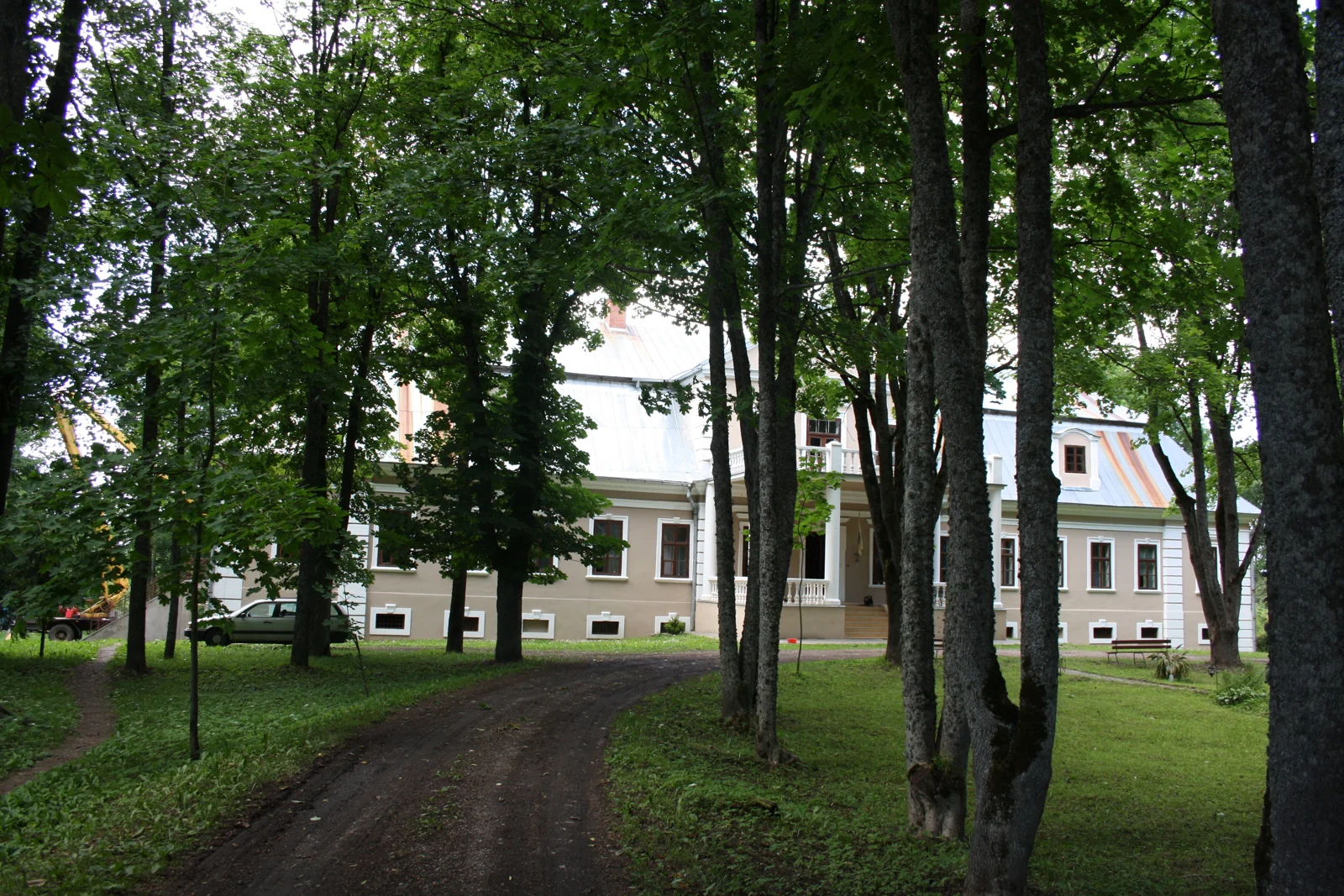
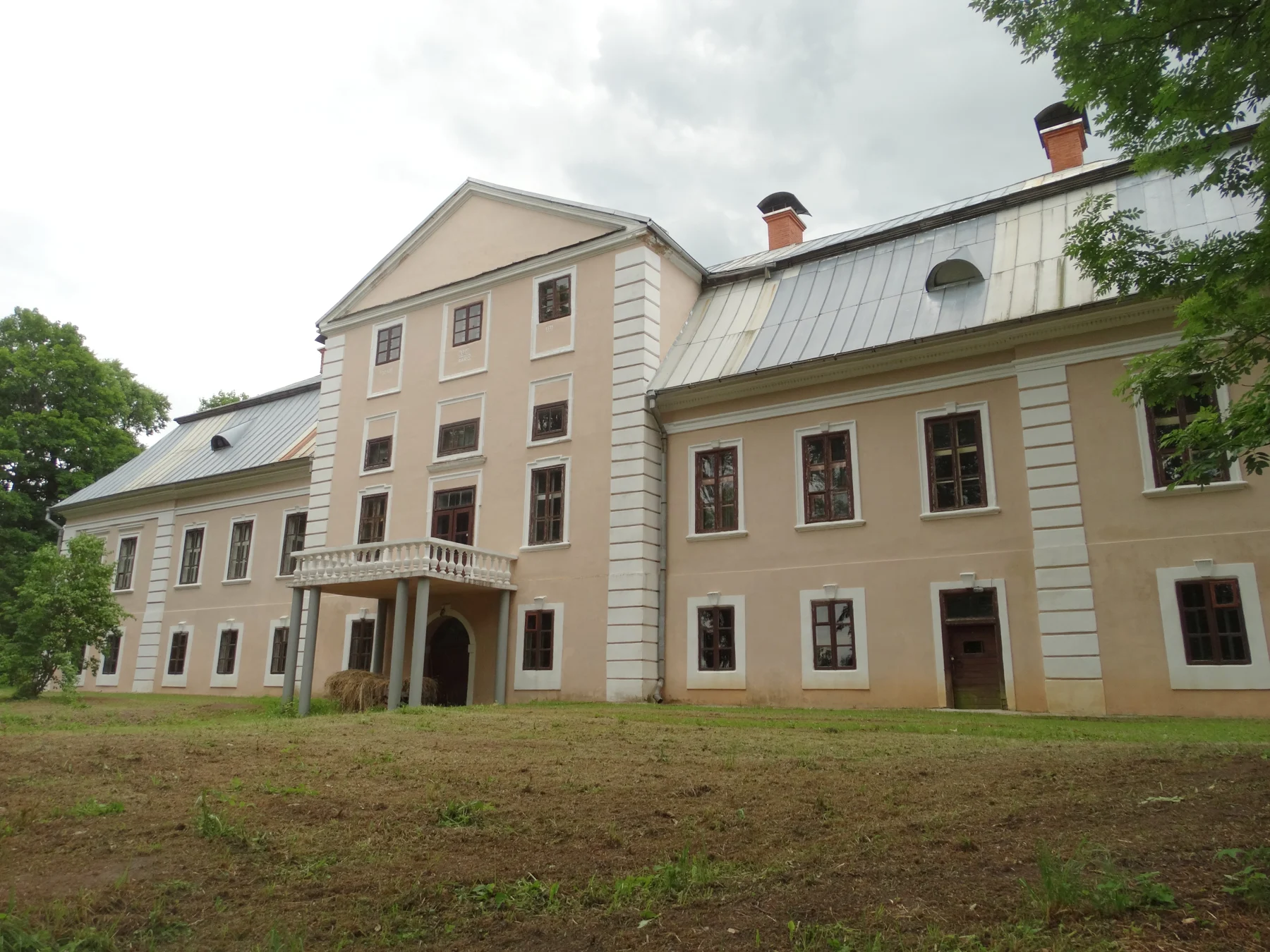
Two dated photographs show the house at different moments. The 2011 image records restoration work; the 2018 view shows the main facade.